
The Birthright Citizenship Ruling Is Worse Than You Think
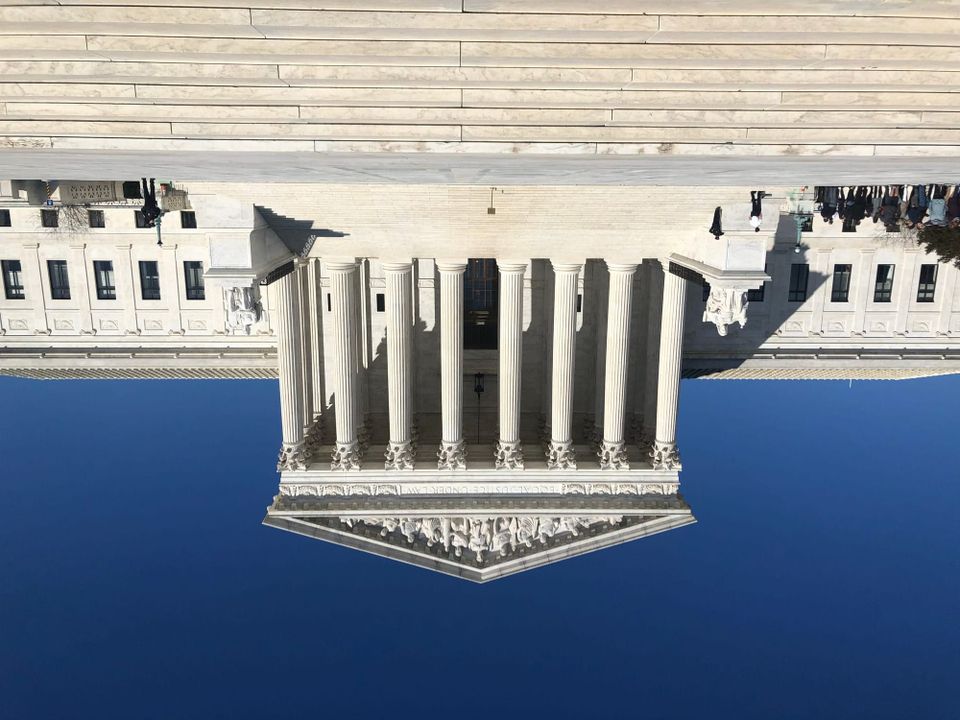
As usual, the Supreme Court has saved many of its most anticipated rulings for the end of the term.
When the Court holds a case until late June, people naturally assume the question must be difficult, consequential, or close. The case gets treated as a “blockbuster.”
But that framing is exactly the problem with Trump v. Barbara, the birthright citizenship case.
Many court-watchers expect the Court to rule against Trump. If that happens, some will treat the outcome as proof that the system worked: Trump tried something outrageous, the courts stopped him, and the Supreme Court showed its independence.
Do not be fooled.
This case is an outrageous miscarriage of justice, even before the final ruling. Simply by allowing it to escalate this far, the conservative Court majority has granted undeserved legitimacy to one of the Trump administration’s most brazenly lawless efforts.
The core issue of the birthright citizenship case is not complicated legal doctrine, but rather basic reading comprehension. The 14th Amendment clearly says that all persons born in the United States and subject to its jurisdiction are citizens. Trump wants to deny citizenship to many children born here because their parents are undocumented or temporary residents. That violates the text, the amendment’s purpose, and longstanding Supreme Court precedent. Nothing about this case is hard.
The mere fact that the Court has us sitting here in late June thinking about birthright citizenship is already an act of wanton partisanship.
One of the Court’s most important powers is choosing what it hears. It receives thousands of petitions each year and decides only a small fraction. Usually, the Court takes a case to resolve a split among lower courts or answer a genuinely unsettled constitutional question.
Neither situation applied here.
Lower courts rejected Trump’s position. The text is plain. The precedent is longstanding. There was no serious reason to elevate this argument into one of the defining cases of the term.
But the Court did.
Simply by taking the case and postponing a decision until the last day of the term, the Court helped transform a fringe, racist attack on the 14th Amendment into a question that millions of people now understand as up for debate.
The damage is not merely symbolic. The Court has already used this fight to change the law in Trump’s favor.
Last year, in Trump v. CASA, the Court used this same litigation to limit nationwide injunctions while leaving birthright citizenship unresolved. For non-lawyers, that means it became harder for lower courts to block unlawful presidential action nationwide. The conservative majority had permitted nationwide injunctions during the Biden administration, but moved to limit them once they were being used against Trump, even in a case where a district judge called the administration’s actions “blatantly unconstitutional”.
So even if Trump loses now, he has already won something. His unconstitutional order became the vehicle for weakening one of the tools people relied on to stop unlawful presidential action before it spreads.
That is the deeper pattern of this Court: even when Trump loses on the merits, he often leaves with more power than he had before.
By turning an easy case into a late-June spectacle, the conservative majority helped both Trump and itself. It encouraged people to assume the justices had agonized over a complex constitutional dilemma.
But there should have been no dilemma here.
The spectacle serves Trump by dignifying his argument. And if the Court ultimately rules against him, it also serves the conservative majority by giving them a convenient legitimacy story.
After a year undermining voting rights, civil rights, and century-old precedents, the conservative majority gets to end this radical term with a high-profile rebuke to Trump and hope the headlines write themselves: the Court stood up to Trump’s overreach, and the system held.
Many will write that story.
But it is a misleading story.
 Alex Rikleen
The full story is that Trump took a plainly unconstitutional idea, dragged it to the center of American politics, and the Supreme Court helped him do it. Along the way, the Court used the very same case to weaken a key protection against unlawful presidential power.
That is not a healthy constitutional system.
It is an extremist Court managing appearances while moving power in one direction.
So if the ruling comes down against Trump, good. That matters. The children targeted by this order deserve protection. The 14th Amendment should still mean what it says.
But the Court does not wield power only through final rulings. It wields power through the cases it takes, the questions it dignifies, the decisions it delays, and the procedural damage it does along the way.
That is why this case is already so bad, regardless of the outcome. A ruling against Trump on Tuesday would not erase the Court’s bad faith. It would only come after the Court helped turn his lawless attack into a debate, used it to weaken checks on presidential power, and carried him farther than he should ever have gone.
Post-publication note: This article was written and published before the official ruling on Trump v. Barbara, with an implicit assumption that the final ruling would be at least 6-3, if not 7-2 or better, upholding constitutional birthright citizenship. The final ruling upholding birthright citizenship was only 5-4 (the Court rejected Trump's actions 6-3, but the constitutional question was narrower).
Follow Alex Rikleen on Bluesky at @rikleen.bsky.social.
If this piece helped clarify what’s happening and why it matters, I hope you’ll consider becoming a paid subscriber. The articles will remain free and public, but paid subscriptions help keep this work sustainable.
Member discussion